Product Description
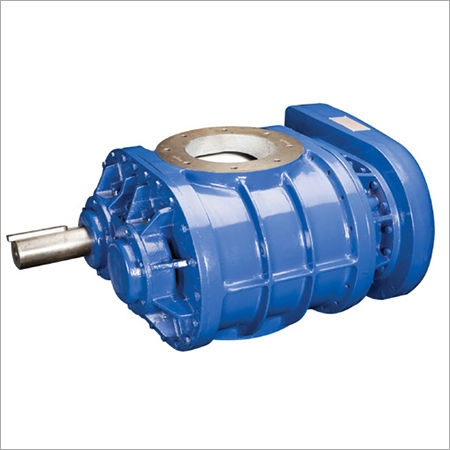
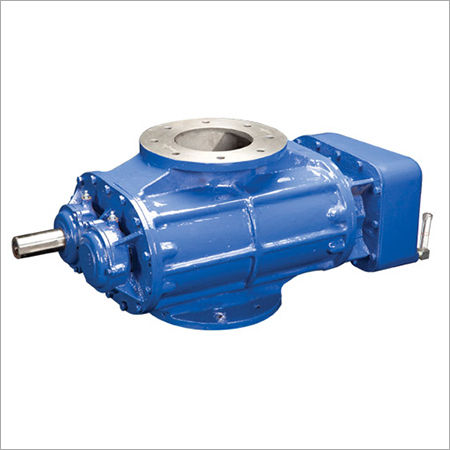
1360-4380 m³hr Twin Lobe Blower
Highlights
| Model No. | SR363 |
| Specification | Twin Lobe Blower |
| Gear Center mm. | 196.9 mm |
| Swept Vol. Per Rev. lit/rev. | 36.3 lit/rev. |
| Air Flow m³/hr | 1360-4380 m³/hr |
| Max. Pressure m bar | 1035 m bar |
| Max.Speed rpm | 2300 rpm |
Pressure Data
| Pressure
RISE mbar | 100 mbar | 200 mbar | 300 mbar | 400 mbar | 500 mbar |
| Blower speed
rpm | m³/h | KW | m³/h | KW | m³/h | KW | m³/h | KW | m³/h | KW |
| 1000 | 1897 | 7.2 | 1804 | 13.3 | 1742 | 19.4 | 1691 | 25.5 | 1646 | 31.6 |
| 1500 | 2944 | 11.5 | 2862 | 20.7 | 2607 | 29.9 | 2759 | 39.2 | 2714 | 48.4 |
| 2000 | 3992 | 16.3 | 3920 | 28.7 | 3872 | 41.1 | 3826 | 53.5 | 3782 | 65.9 |
| Pressure
RISE mbar | 600 mbar | 700 mbar | 800 mbar | 900 mbar | 1000 mbar |
| Blower speed
rpm | m³/h | KW | m³/h | KW | m³/h | KW | m³/h | KW | m³/h | KW |
| 1000 | 1603 | 37.7 | 1562 | 43.8 | 1523 | 49.9 | 1487 | 56 | 1451 | 62.1 |
| 1500 | 2669 | 57.6 | 2627 | 66.8 | 2586 | 76.1 | 2546 | 85.3 | 2507 | 94.5 |
| 2000 | 3736 | 78.3 | 3692 | 90.7 | 3648 | 103.1 | 3605 | 115.5 |
|
|
Vacuum Data
| Vacuum
mbar | -100 mbar | -200 mbar | -300 mbar | -400 mbar | -500 mbar |
| Blower speed
rpm | m³/h | KW | m³/h | KW | m³/h | KW | m³/h | KW | m³/h | KW |
| 1000 | 1884 | 7.1 | 1770 | 13.1 | 1679 | 19.2 | 1578 | 25.3 | 1456 | 31.4 |
| 1500 | 2933 | 11.2 | 2832 | 20.4 | 2747 | 29.6 | 2643 | 38.8 | 2512 | 48 |
| 2000 | 3981 | 15.7 | 3894 | 28.1 | 3815 | 40.4 | 3709 | 52.8 | 3568 | 65.1 |
Versatile and Efficient PerformanceEngineered for consistent and reliable operation, this twin lobe blower is suitable for a wide range of applications, including wastewater and power plants, chemical processing, and pneumatic conveying. Its precisely machined, dynamically balanced rotors and heavy-duty bearings ensure smooth performance even under demanding conditions.
Flexible Mounting and Drive OptionsWith both horizontal and vertical mounting choices, the blower can be seamlessly integrated into diverse installation spaces. Direct coupled or belt-driven configurations allow users to select the most suitable drive method, ensuring easy adaptation to existing systems.
Low Noise and Minimal MaintenanceOperating at less than 85 dB(A), this blower offers a quieter working environment. Its design prioritizes easy access for maintenance, utilizing forced or splash lubrication and heavy-duty seals to reduce wear and extend service intervals, keeping operational costs in check.
FAQs of 1360-4380 m/hr Twin Lobe Blower:
Q: How is the 1360-4380 m/hr Twin Lobe Blower typically installed and operated?
A: The blower can be mounted either horizontally or vertically, providing flexibility for installation. It operates using a direct coupled or belt-driven motor supplied with an electric power mode (415V AC, 50 Hz, three phase). Flanged connections as per ANSI or DIN standards simplify integration into existing pipelines.
Q: What are the main applications for this twin lobe blower?
A: This blower is ideally suited for wastewater treatment plants, pneumatic conveying systems, aquaculture facilities, chemical plants, cement industries, and power plants, thanks to its robust construction, reliable air flow, and suitable pressure ratings.
Q: When should maintenance be performed on the twin lobe blower?
A: Although designed for low and straightforward maintenance, periodic checks on lubrication, seals, bearings, and drive components are recommended according to the manufacturers guidelines, which help ensure reliable performance and prevent unexpected downtime.
Q: Where can this blower be used in terms of environmental conditions?
A: It is built to function efficiently in environments with ambient temperatures up to 80C. The anti-corrosive painted coating and rugged materials make it suitable for both indoor and outdoor industrial operations.
Q: What is the process for servicing or accessing internal components?
A: The blower is designed with easy-access features, allowing technicians to reach internal components, such as rotors, bearings, and seals, without significant disassembly. This decreases downtime and facilitates routine maintenance tasks.
Q: How does the twin lobe design benefit operational efficiency?
A: Precisely machined and dynamically balanced twin lobes ensure smooth, vibration-free operation, minimizing energy loss and maintaining a constant flow. This leads to stable system pressures and efficient pneumatic conveyance.
Q: What benefits does the forced/splash lubrication system offer?
A: The forced or splash lubrication provides continuous, reliable lubrication to critical components, enhancing longevity, reducing friction and heat, and helping to maintain lower maintenance costs over the blowers service life.












 English
 Spanish
 French
 German
 Italian
 Chinese (Simplified)
 Japanese
 Korean
 Arabic
 Portuguese



 Send Inquiry
